Tuesday, 10 March 2009

Following the comments

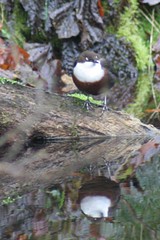
European Dipper, found on fast flowing upland streams and rivers.


I don't know how many of you follow the comments on blogs, and check them out for further comments, but sometimes we have wonderful discussions going on "behind the scenes." The latest (yesterdays' comments) has been about a couple of American birds, the Purple Finch, and the Red-winged Blackbird. I have been Googling them to discover more about them and thought I would share the following link with anyone who has an inquisitive mind:

http://www.birds.cornell.edu/AllAboutBirds/BirdGuide/Red-winged_Blackbird.html#fig1

http://www.birds.cornell.edu/AllAboutBirds/BirdGuide/Purple_Finch.html


You can listen to their calls too - the Blackbird is really raucous and jungle-like, nothing like the genteel English Blackbird.

http://www.garden-birds.co.uk/birds/blackbird.htm

Here, the above site gives a list of the more regularly seen birds:

http://www.garden-birds.co.uk/birdindex.htm

where you can identify different garden bird and common species and learn about them.

I did a short walk today, and was hoping to see the Dipper down by the river, but there were none to be seen, though I lingered for a while on the bridge.

I have discovered, if you really go looking, you can source videos - here is our Eurasian Dipper, in various poses:

http://ibc.lynxeds.com/species/white-throated-dipper-cinclus-cinclus

Monday, 9 March 2009

Wild birds again

Some of these photos are a bit blurred as there was so much action at the nut nets. If you click on them, they will enlarge, so you can do a head count. I think there are 10 or 11 Blue Tits in the top photo for starters . . .


It was cold and windy here yesterday. I was amazed at the number of birds visiting the nut nets - the garden was a hive of activity, with birds taking their place in the queue, and going from nut-net to branch, or branch to nut-net, or down to the ground. I also put out a handful of rolled oats (I have a sackful) for my Robin and the Blue Tits and Chaffinches who visit the kitchen windowsill. Normally one handful will suffice, but yesterday I have to put four lots out. I know it was windy, but the wind was blowing the oats in against the window. These were very hungry little birds. It was as busy as it was in the coldest of the winter weather in January. At one point the long nut net was absolutely heaving with the colony of House Sparrows who live behind the barge boards on our house. Now you see why I can never take part in the RSPB garden bird count!


Saturday, 7 March 2009

Identifying wild flowers by their leaves

I had a little stroll with my camera to hand yesterday, and took photos of various leaves that I am able to identify (and a couple I'm not sure about so will have to check). I will assume no knowledge at all, so even the humble Dandelion is here . . .

Herb Robert, which has a pink flower from late April through to October. The red colouring of the stalks and leaves is fairly typical of winter foliage, but much greener leaves will show later. Sometimes the leaves go a deep rusty pink when they are old.

The humble Dandelion with its saw-toothed leaves, next to the spotted leaves (right) of a Wild Arum Lily. The Dandelion is also known as Jack-P*ss-the-Bed, Wet-the-Bed and other country names, indicating the plants use for urinary problems, as it is a diuretic. The round seedheads are of course the country man's clock, the time depending on how many blows it takes to release all the seeds. Very scientific! The leaves were and still are used in salads (though I find them bitter) and the roots may be dried, roasted and then used for making coffee. Amazingly, there are more than 200 micro-species in the UK.

A splendid dark varient colouring of the Ivy leaf, with a lighter sort behind it. I like the really deep burgundy red ones you sometimes find in winter.

The strap-like Harts Tongue Fern to the right of a good early growth of Cow Parsley. In sheltered spots here they have been showing young leaves all winter.

The male flowers of the Dog's Mercury, a hedgerow plant, and beneath it the heart-shaped leaves of a Celandine.

The tiny yellow-studded "flowers" of the Opposite-leaved Golden Saxifrage, which grows in damp places here. The 3-leaved wild Strawberries beneath it, and what looks like an early growth of Ground Elder top left.

Hazel catkins, and you can just see the little red female flower which will be the Hazel nut once it is fertilized.

This is Garlic Mustard or Jack-by-the-Hedge. Its leaves are also good in spring salads.

Finally, Ramsons, or Wild Garlic, which are wonderful in cooking. You may smell them before you see them, as they have a very strong aroma of Garlic, particularly when crushed.

More tomorrow.

Friday, 6 March 2009

Deer at Gelli Aur, Carmarthenshire

Gazing into the view. I intend to walk this and other footpaths this spring.


There was another hard frost here this morning. The temperature is NOT conducive to long posts on the computer, so I will be brief. I stood for a brief while in the yard this morning, listening to the birdsong. The starlings which have billeted with us this winter for the first time, are very vocal first thing in the morning, when they seem to be planning the day, and late afternoon, when they debate where they will sleep that night. It is always the same stand of ash trees, but they try out other trees for size, setting up a constant clamouring twitter. A few birds will leave the current trees and move on elsewhere. Then a few more join them. Then a deafening silence falls and in a mass, all the birds swirl up into the sky and stream away towards a new roost. The crow family act in a similar manner.

At the top end of our yard this morning, there were several Blue Tits in the apple trees. One couple seemed to be thinking of pairing up, and would fly in a loop - he following she presumably, land again, bounce nearer to one another and loop the loop once more. I don't have nest boxes here, but think I will talk to my husband . . . he has plenty of wood.


These Oak Apples are the result of a Gall Wasp, which lays its eggs in the oak leaf, and as they turn into larva, they inject the leaf with chemicals which cause this mutation.

Another photo of the long tailed Bank Vole which I was watching last week. His hole was just a few feet away and he was totally at ease - I don't think he can have noticed me at all. He probably thought I was a tree!

One of the line of stunning lime trees at Gelli Aur (which is Welsh for Golden Grove). Note the natural 'witching' or burring of the trunk. In spring, when they are in flower, the lime blossom has the most wonderful scent, and it produces honeydew which is very attractive to insects.

There are three species of Lime tree - the Small-leaved Lime, the Large-leaved Lime and their hybrid, the Common Lime. These are introduced plantings - they only occur naturally in southern Britain, and indeed, that is the very northern edge of their range.

The photos were taken at nearby Gelli Aur last week. There is a lovely walk through the Deer Park, but I watched them from the back of the tea shop and they weren't at all bothered about me taking photographs. These are Fallow Deer, but as they have their winter coats on, they are much darker than in summer when their spots reappear.

http://www.worlddeer.org/fallowdeer.html

Compare with the smaller Roe Deer:

http://www.worlddeer.org/roedeer.html

There are 6 species of deer found wild in the UK. These are Fallow, Roe, Red, Sika, Muntjac and Chinese Water Deer. All were introduced to Britain, bar the Red and Roe deer, which are indiginous species. Fallow deer were originally introduced by the Normans and were hunted by the nobility - deer parks were surrounded by a pale - or ditch and fence (I know of one at Lordswood on the edge of Southampton - even the name is a give-away now.) The expression "beyond the pale" can be traced back to this term. Sika, Muntjac and Chinese Water Deer either escaped or were let loose from private collections.


I couldn't resist this handsome chap, who was watching the deer park near by me. The rangers have had to paint the glass in the bottom of the tea shop windows white, to stop the peacocks attacking the 'strange birds' they see!

Thursday, 5 March 2009

Your local Wildlife Trust

Young Hart's Tongue ferns unfurling.


One of the best ways to learn about the countryside, and especially the county you live in, is to join your local Wildlife Trust. When I lived in Hampshire and then Dorset, I belonged to the relevant Wildlife Trusts, and have some happy memories of outings, especially Fungi Forays. Adult membership is in the region of £30 a year, so less than 50p a week. Junior membership is usually half that, and family membership half as much again, so very good value for money.

For this small sum, you will usually have free access to all the Nature Reserves belonging to the Trust (and indeed, your membership helps to purchase more). You will have a copy of the Trust's own magazine - usually quarterly - as well as 3 issues a year of the national magazine of the Wildlife Trusts. You will be sent regular events guides which will give details of walks, talks, Junior Wildlife Watch activities, and Volunteer work parties.

Your membership will help to maintain current Nature Reserves and save other threatened areas. It will pay for the Trust to train and employ conservation and education officers and it will help to train and educate the Volunteers.

Find out about YOUR local Wildlife Trust and join. Learn through the Wildlife Workshops. Find out how to make your garden more wildlife-friendly. Record the wildlife you see in your patch.

Click on the Wildlife Trusts link to the right of the blog for further details.


The leaves of Shining Cranesbill.

Tuesday, 3 March 2009

Plants in your post code area

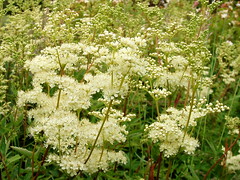
Meadowsweet, where the inspiration for the name of this blog come from. It grows all around here.


Several of these sites on the right were highlighted for me by Hen - all I can say is a HUGE thank you, as they are all excellent resources. Some I was aware of, but the post code plants . . . well, I have my summer mapped out. I downloaded ELEVEN pages of plants which had been recorded in my part of Carmarthenshire. Many I already knew and had seen, quite a few I know and haven't seen, and some are totally new to me. I shall sit down with my all-encompassing Marjorie Blamey/Christopher Grey* botanical book this afternoon and extend my knowledge. I intend to try and put ticks beside most of these this summer . . . (*The Illustrated Flora of Britain and Northern Europe).

A lovely photo of Meadowsweet and Purple Loosestrife. Many thanks to contributors on Creative Commons for these photos.

Monday, 2 March 2009

Stop. Look. Listen.

Those words are SO important when it comes to studying the natural world around you. How often do we find ourselves running from one chore to the next, wishing that we had time to relax, sit down or fulfil those magic words "do nothing" - which sadly are rarely guilt-free moments . . .

I am as guilty as the next person, in my ticking off the jobs from the mental list, but at the weekend I stood with a cup of tea and just watched the birds at the nut nets, and I mean REALLY watched. Normally I am just counting off species. We have Blue Tits, Great Tits, Coal Tits, House and Hedge Sparrows, a Greenfinch, a Nuthatch, a pair of Greater Spotted Woodpeckers and even a starling last week which regularly use the nut nets. On the ground beneath, pecking at bits there are Chaffinches, Robins and the Sparrow overflow. I was delighted to see a pair of Bullfinches in my Damson tree last week, but fortunately for the tree, there weren't any buds to tempt them. They were once the bane of the Head Gardener's life, as he tried to save his blossom from them.

Really STUDYING nature is another thing. Watch the pecking order on the nut nets. See where the queue of birds waits until there is an opening. Notice that they will use a nearby water source to drink from - my birds like the nature pond, which has overgrown edges and they can utilize a twig or stem bending into the water to perch on (a good reason NOT to be too tidy in the garden.) Note which other areas of the garden they use a lot, which trees they hunt for insects on. Where do they roost at night? Listen to their song and learn to recognize which bird is paired with which song. At this time of the year in particular, see them choosing mates, checking out potential nest sites. Notice the squabbles , the territorial fights (Robins are particularly fierce!) whilst Blackbirds tend to just edge their way out of the territory of another bird. I watched 3 cock birds one day who had all alighted in one tree. The bird whose territory it was pursued the other two, who kept moving further and further along their respective branches until they had to fly away or fall off the end!

In the terrible cold spell we had in January, I was out at dusk (or dimpsey as I call it - a lovely Devon word which my father used). I noticed several wrens congregating first in an apple tree, and then gripping the side of the house wall, and on the guttering, and then one by one they would disappear behind the barge board. If one was out of turn, it was promptly thrown out again, and another bird took its rightful place. About 8 or 9 wrens coopied up together to stay alive through that bitter night. The same thing happened at the other end of the house, much to my amazement and delight. Troglodytes indeed!

A pair of Blue Tits on one of the nut nets. Distinguishable from Great Tits because they are smaller with blue heads and a little strip of blue on their chests. Great Tits have black heads, and a manly black stripe on their chest. In the past their family were known as "titmice".


Two photos of "Woody" who comes regularly to the net, sometimes bringing his partner. They always fly off over the yard, to the woodland beyond. The Lesser Spotted Woodpecker is a shy bird and you will not see that on nut nets. "Woody" has a buff coloured chest and the most splendid scarlet rump.

The Nuthatch, upside down as always. He is a bully boy and the other birds clear off the minute he hoves into view! Please forgive the poor quality of the pictures, which were taken through the kitchen window . . .

We have plenty of frogspawn in the nature pond again. We dug it specially to have a shallow shelf for wildlife to use. At the beginning of the week, we had two patches of frogspawn. Now we have about a dozen and what was laid laid night, despite my topping the water level up a bit, was slightly out of the water and the hard frost last night froze the pond a little, so it may not survive. We shall see. The earlier frogspawn has sunk to the bottom of the little ledge, and is dusty looking from the silt which has been stirred up by frogs hurtling for cover when they hear footsteps (feel them rather) or hear a door bang shut. If you go out after darkness, you can hear them croaking - it sounds like the African savannah! Creep up with a torch and you will see them until, disgruntled, they make for cover again. Ours are really WILD and don't care to be seen if they can help it. I spotted a Common Newt the other day, and they will be mating around now and laying their eggs also. We often have them in the house when they are first leaving the pond, and they march resolutely under the gap beneath the front door and die of dessication in the inner reaches of the house - carpets and walking boots not being good habitats for them!


Go out into your garden. Shut your eyes, and listen, really LISTEN. Even in a town garden you will be amazed at how many birds you can hear, and perhaps realize how much you screen out without realizing it . . .